• Blog
  • About
Powered by Blogger.

Path to prosperity

SPHREIT released its 3QFY20 Business Update this evening. This comes after it shifted to half-yearly reporting; the link to the presentation can be found here. Would like to highlight a few things to take note of:

1. DPU continues to be low but may not be because of a low payout ratio
SPHREIT declared a DPU of 0.5 Scts for the quarter representing an increase over 0.3 Scts declared in the last quarter. However, it did not disclose its distributable income hence we are unable to accurately calculate what the current payout ratio is. If we take last quarter's results, this represents a payout ratio of 33%, up from 20% previously. 

In all likelihood, 3Q distributable income would have been significantly worse off than 2Q as the quarter covered Mar-May which were the months which felt the most impact from Covid-related mall closures. Additionally, SPHREIT also announced that they were giving rental waivers for tenants. Therefore, the reduced DI would mean that payout ratio is probably more than 33%. 

2. Gulf in prime and suburban not as big
My original thesis was that prime district malls in Orchard//City area like Paragon would suffer substantially more than suburban retail due to the target audience. Apart from having a bigger residential catchment, suburban malls typically tend to have a larger proportion of 'essential' tenants like supermarkets and F&B. Whereas prime district malls tend to have a larger percentage of high fashion and targets discretionary and tourist spend. Therefore I expected suburban malls to be substantially more resilient. 

Looking at the visitor traffic figures, Paragon experienced a 58% decline in traffic while Clementi Mall's traffic declined 53%. Would have thought that the difference would be much bigger. My guess would probably be that pre-Covid Paragon was not overcrowded whereas Clementi Mall is frequently packed to the brim. Hence with a higher base there was much more room for traffic to fall at Clementi Mall. 
SPH REIT Footfall (Source: SPH REIT)

3. Occupancy remains high but what about rental reversion?
SPHREIT reported a committed occupancy of 98.8% across its malls in Singapore and Australia. Importantly, its 2 largest revenue contributors had occupancies of >99%! I think this is impressive as it probably implies only 1-2 shop lots are vacant. Going forward both Paragon and Clementi Mall have 28%/22% of lease renewals in FY21 and this will be a critical point to watch as leases do take time to expire. I also note that SPHREIT did not disclose its rental reversions in the presentation pack. We are therefore unsure if the high occupancies are a function of cutting rents. 

In the down-cycle that is coming, I believe that landlords will do well to shore up occupancy even if it is at the expense of rental rates. Unlike rental rates, occupancy is binary, either you are getting income from that shop lot or you are not. However, do hope that the REITs can be transparent in sharing such figures so that unitholders are well-informed. 
SPHREIT Occupancy (Source: SPHREIT)
Share
Tweet
Pin
Share
1 comments
Following the private placement by MINT to acquire the remaining 60% of its first US Data Centre portfolio, other REITs with strong balance sheets made moves recently. 

Ascendas REIT
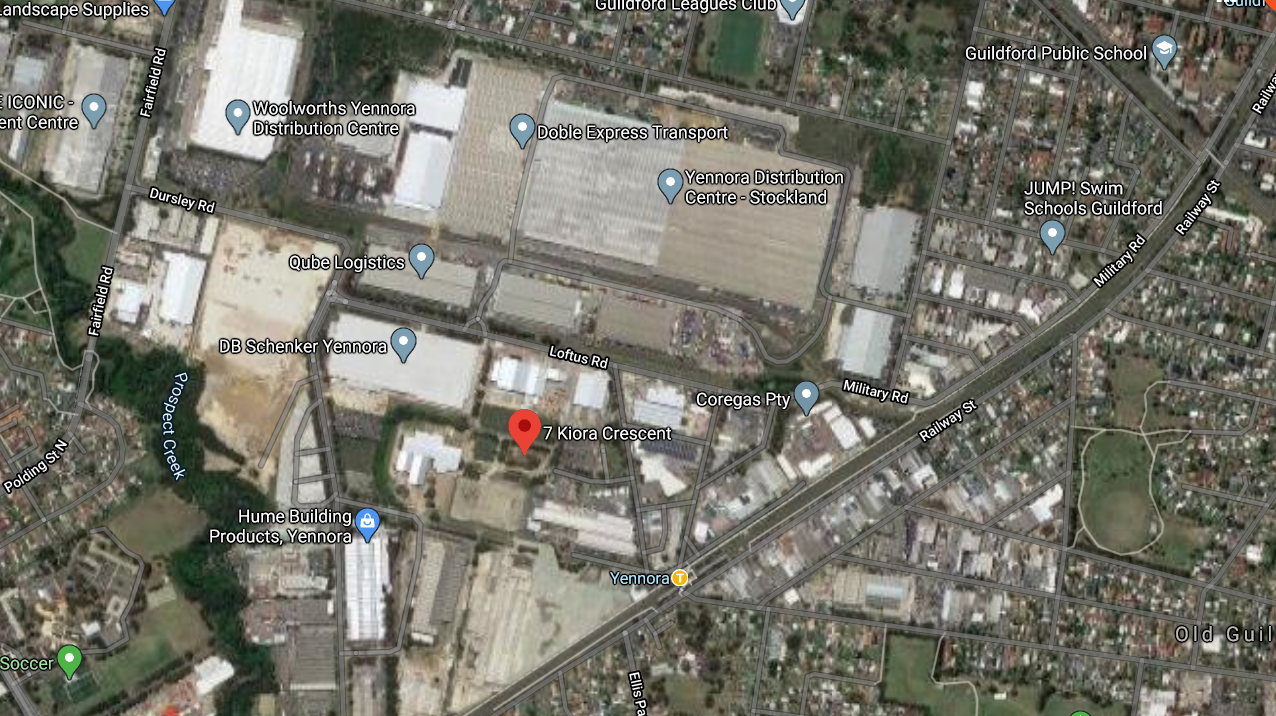
AREIT announced the acquisition of a yet-to-be-built logistics property in Sydney today (1 Jul 2020) for A$23.5m. The property will be developed by the Vendor and completed by 2Q2021. In the press release, AREIT mentioned that it managed to acquire the property at an almost 20% discount to its 'as if complete' valuation and this implies a 1st year NPI yield of 6.2%/5.8% pre and post-transaction costs. 

With a huge portfolio across Singapore, Australia and the UK, this acquisition barely moves the needle although AREIT says it is accretive to DPU. To unitholders, the REIT is also taking on development risk as the property is uncompleted and does not have a tenant. To mitigate this risk slightly, the Vendor is providing a 9.5months rental guarantee. 

REITs taking buying uncompleted assets or taking part in development means that their capital is tied up but not generating any income for unitholders (ie. not so efficient). However, as this acquisition is small, I do not think that there will be any noticeable impact on AREIT. Additionally, this method allows AREIT to gradually build up its portfolio accretively as they are unlikely to get good yields on completed (and fully tenanted) assets. The acquisition is expected to be fully funded by debt or internal resources hence the ability to get yield accretion. 
Google Map View of the acquisition (Source: Google)

Frasers Centrepoint Trust
The more sizeable acquisition was made by FCT's acquisition of an additional 12% interest in the PGIM ARF Fund for S$197.2m. This brings its interest in the fund to 36.89% from 24.82%. As a recap, the PGIM ARF Fund contains 5 retail malls and 1 office property in Singapore and 1 retail mall in Malaysia. Ever since FCT and its parent, FPL, started buying stakes in the Fund, their intention was always to absorb these malls into FCT eventually. 

According to FCT, this transaction will be DPU accretive on a pro-forma basis by +0.13%. The transaction will be fully debt-funded and would cause gearing to rise from 32.9% to 36.2% on a pro-forma basis. 

I like the transaction as it continues FCT's push to eventually own the entire Fund. The properties are all sub-urban retail which plays nicely into the Covid-19 resilience theme vis-a-vis prime district malls. Looks like FCT will continue to make bite-sized acquisitions of stakes in the Fund going forward. 

As mentioned in my previous post, I like the growth pipeline for FCT. Other than the PGIM ARF fund, it also has additional stakes in Waterway Point and Northpoint City that it can acquire going forward. A possible benefit of acquiring 100% of PGIM ARF is that FCT could then do away with the Fund structure and have these assets directly under FCT. This would save unitholders one level of fees; currently, I believe that unitholders are being charged fund management fees by PGIM ARF and REIT manager fees from FCT for every dollar that the PGIM assets generate. 

Both the AREIT and FCT transactions again emphasize the importance of having a strong balance sheet. For AREIT, it is large enough that bite-sized transactions can still be done without making too much of an impact on its balance sheet. While for FCT, it had always maintained one of the lowest gearing ratios historically, which allowed it to take advantage of opportunities when they arise. 
Share
Tweet
Pin
Share
No comments

Frasers Centrepoint Trust (‘FCT’) is a REIT that owns and operates 7 suburban malls in Singapore. FCT generates rental income from its malls that have a total of 1.4m sqft of net lettable area. The REIT is sponsored by Frasers Property Limited, which develops and manages a wide range of properties globally. While its share price has somewhat recovered, I think there is room for more premium than what the market currently accords to it. FCT continues to offer investors good value due to:

1. Visible pipeline for acquisition growth

FCT currently holds a 25% stake in PGIM ARF fund, which has 5 suburban malls with a total of ~1.0m sqft of retail space under the AsiaMalls brand. Its parent, Frasers Property (‘FPL’), holds 65% while the remainder is held by third parties. As part of a possible capital recycling strategy by FPL, the 65% stake could be divested to FCT given that the characteristics (type of malls and tenant mix) of the PGIM ARF assets are very similar to the type of malls FCT currently holds.

 Apart from acquisitions of stakes in the PGIM ARF fund, there is also the potential for FCT to increase its stake in Waterway Point, in which it currently holds 40%. The stake in Waterway Point was acquired in 2019 and this could go up once the mall stabilizes; Waterway Point is currently still within its first 2-3 renewal cycles which tend to be periods of stabilization in terms of tenant mix and footfall. Similarly, FCT could also acquire Northpoint City South Wing; FCT currently owns Northpoint City North Wing. Northpoint was reopened in 2017 after extensive asset enhancement works and is also yet to fully stabilize according to FCT. 

2. Dominant malls in regions with low floorspace per capita in Singapore

FCT’s 2 biggest revenue contributors, Causeway Point and Northpoint City North Wing, have dominant positions in the Northern part of Singapore. The Northern part of Singapore is also the region which has the lowest shopping mall floor space per capita according to a Cistri report in Aug 2019. This implies that both malls have an excellent catchment of residents and have less competition compared to other regions.

Floor space per capita (Source: Cistri)

3. Suburban retail to remain resilient amidst Covid

Suburban retail malls differ from their prime district counterparts in terms of tenant mix, with a higher proportion of tenants being in essential goods and services (ie. Supermarkets and F&B outlets). In the latest retail sales figures released by Singstat, Supermarkets and Convenience Stores were the only 2 categories that registered yoy and mom growth.

FCT is well-exposed to these sectors as shown in its portfolio trade mix where about 50% of its gross rental income is derived from F&B, Household and Supermarket tenants. The coming Covid-19 induced recession also plays to the value proposition of suburban malls, which is to have products that have accessible pricing relative to prime district malls. With consumers tightening their purse-strings, the search for value items could divert spending towards suburban malls.

FCT portfolio trade mix (Source: FCT)

Key risks 

1)     Business impact from Covid-19. An extended virus scare could negatively impact FCT’s tenants and could potentially lead to negative rental reversions and lower occupancy going forward. This could also negatively impact property valuations and cause P/B to rise in subsequent years. 

2)     Concentration risk. FCT’s top 2 malls, Causeway Point and Northpoint, contribute 75% of its Net Property Income. Any decline in population in the Northern part of Singapore or new malls built in the area could negatively impact footfall in the 2 malls.

3)     Large tenant non-renewals. About 14% of FCT’s total gross rental income is up for renewal in FY20 and non-renewals, especially for anchor tenants, could imply a period of reduced rent even if a replacement tenant is found due to the time required for fitout works. 


Share
Tweet
Pin
Share
No comments
Newer Posts
Older Posts

Popular Posts

  • ARA Logos Logistics Trust: 3 reasons to drive a re-rating of this laggard
  • Office REITs results round up: WFH a boon or bane?
  • MSCI Singapore Index rebalancing impact on stocks

Tags

  • Centurion Corp
  • Consumer
  • Covid-19
  • Coworking
  • Eagle Hospitality Trust
  • Gloves
  • Healthcare
  • Index
  • Property
  • REITs
  • Sembcorp
  • SPH REIT
  • Supermarket

Blog Archive

  • ▼  2021 (3)
    • ▼  6 Jun - 13 Jun (1)
      • ARA Logos Logistics Trust: 3 reasons to drive a re...
    • ►  21 Feb - 28 Feb (1)
    • ►  24 Jan - 31 Jan (1)
  • ►  2020 (43)
    • ►  30 Aug - 6 Sep (1)
    • ►  23 Aug - 30 Aug (1)
    • ►  9 Aug - 16 Aug (1)
    • ►  2 Aug - 9 Aug (2)
    • ►  26 Jul - 2 Aug (2)
    • ►  19 Jul - 26 Jul (2)
    • ►  12 Jul - 19 Jul (2)
    • ►  28 Jun - 5 Jul (2)
    • ►  21 Jun - 28 Jun (2)
    • ►  14 Jun - 21 Jun (2)
    • ►  7 Jun - 14 Jun (2)
    • ►  31 May - 7 Jun (1)
    • ►  24 May - 31 May (3)
    • ►  17 May - 24 May (1)
    • ►  10 May - 17 May (3)
    • ►  3 May - 10 May (2)
    • ►  26 Apr - 3 May (3)
    • ►  19 Apr - 26 Apr (1)
    • ►  12 Apr - 19 Apr (2)
    • ►  5 Apr - 12 Apr (2)
    • ►  29 Mar - 5 Apr (2)
    • ►  22 Mar - 29 Mar (2)
    • ►  15 Mar - 22 Mar (2)

Created with by ThemeXpose